Color Science and Eye Comfort in User Interfaces
How the human brain interacts with colors… and what makes a design comfortable or irritating?
Why Care About Eye Comfort?
Many believe that design is just about colors and icons, while the truth is that the eye and brain interact very sensitively with light, contrast, and patterns. The goal of this guide is to understand human visual behavior, and how any system—dashboard, store, service website—can be more comfortable and clear.
How Does the Brain Read Interfaces?
💡 Comfort = balance between dark and light + clear borders + minimal decoration
Why Some Designs Are "Professional But Annoying"?
The biggest mistake designers make: Glows + Dark backgrounds + Similar cards.
Overstimulation – Excessive eye stimulation
Cognitive Load – Your brain tries to differentiate similar elements
Weak Hierarchy – You don't know what's most important
Important UX Studies
Dark + Neon interfaces cause visual fatigue after 20–40 seconds
Pale blue + gray colors are the most comfortable and stable over hours
People are comfortable with 1:10 contrast at night and 1:14 during the day
Users need a quiet area on the page (Visual Silence)
Scientifically Proven Comfortable Colors
Calms the eye and increases focus
Best background for dashboards
Psychologically comfortable for success
Causes psychological pressure, for errors only
Professional but causes fatigue
Why Dark Backgrounds Succeed… and Fail?
Succeeds when
Fails when
Real Example: Applying Studies on Turki Aljaber
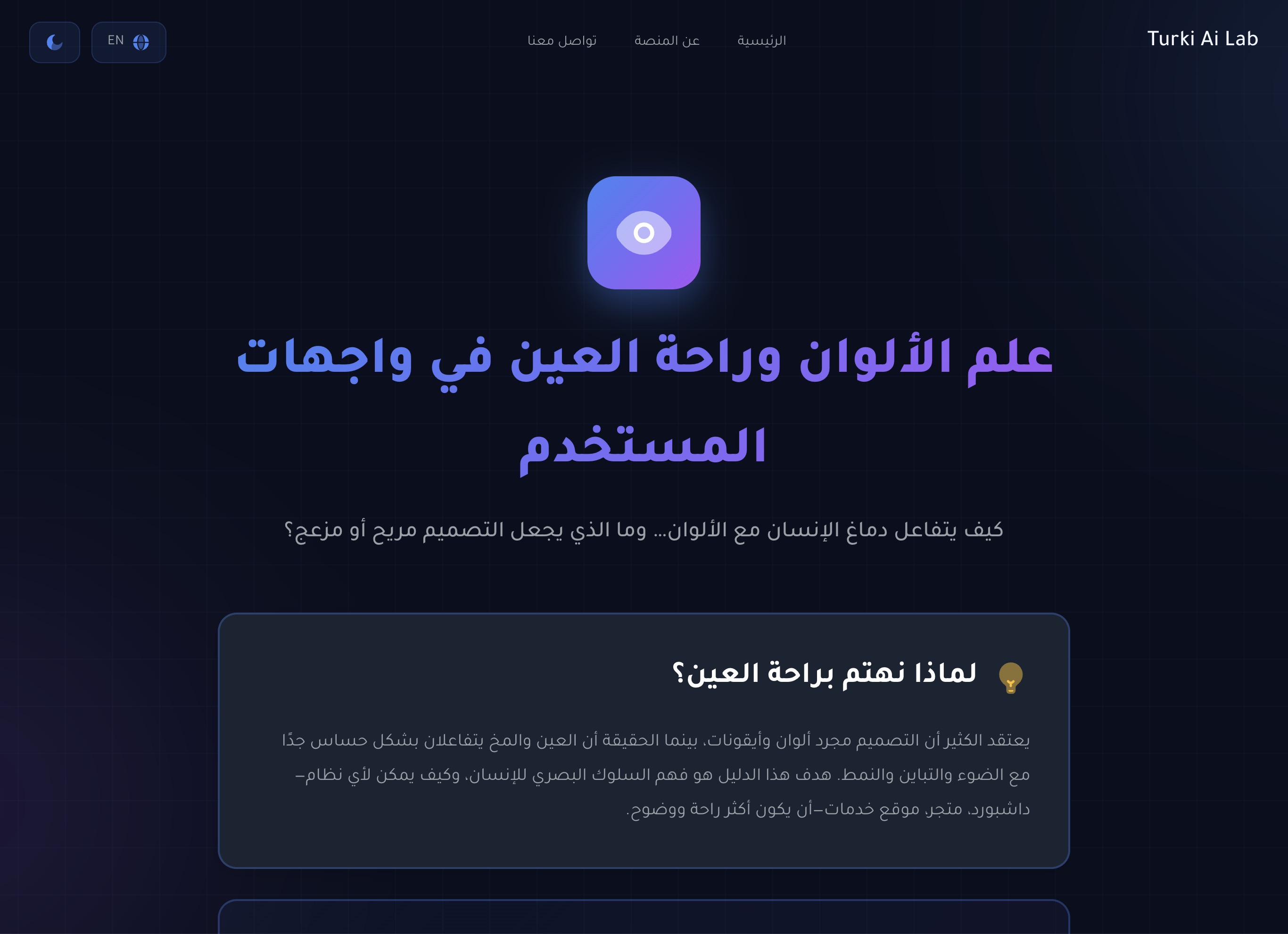
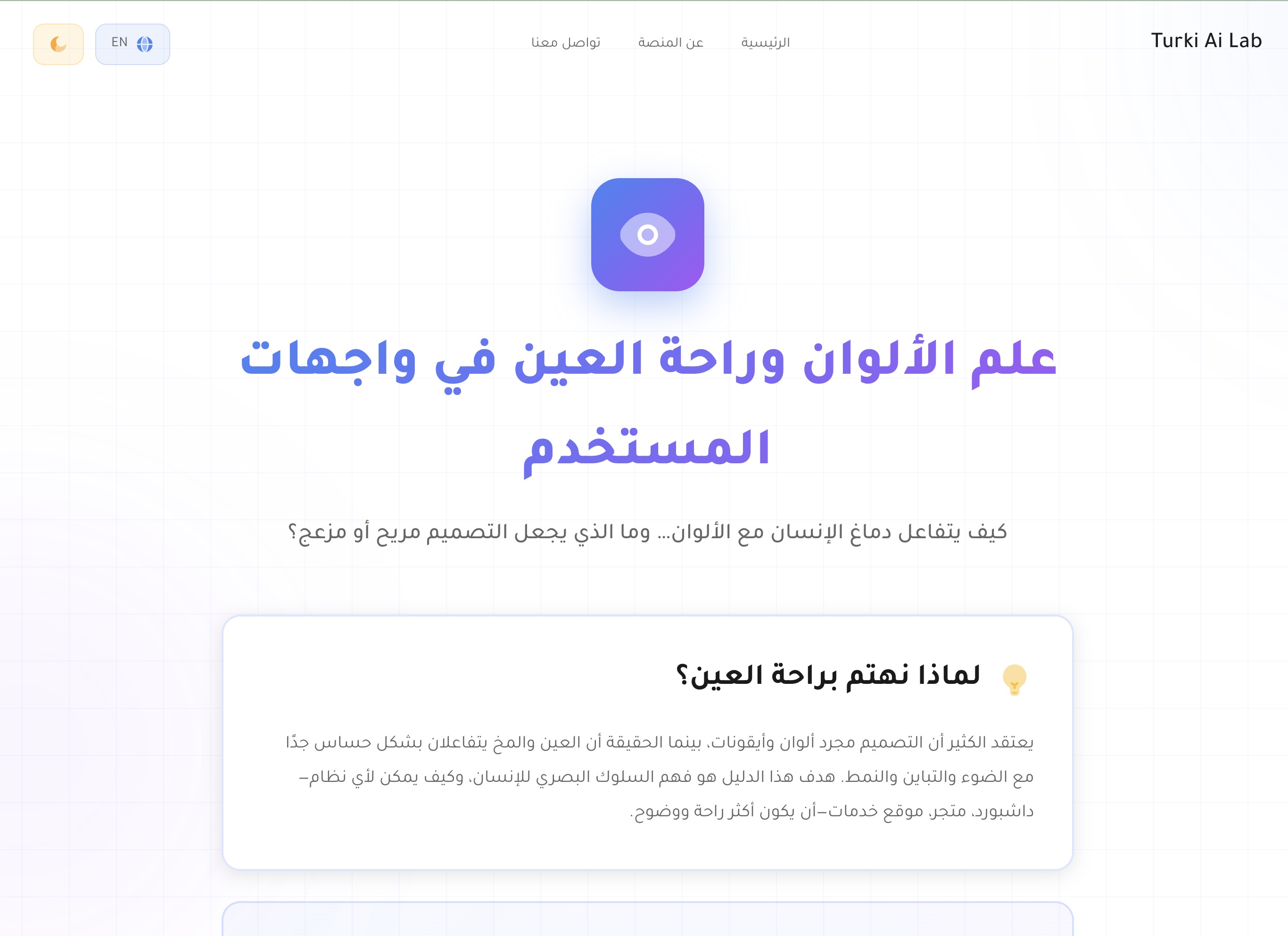
Let's apply everything we learned to a real example from our website. Here are two versions of the same page - dark and light:
Dark Version
Light Version
🌙 Dark Version Analysis
⚠️ Problem
Card almost disappears in background! Low contrast + glows = hidden fatigue after 20-40 seconds (IBM study)
☀️ Light Version Analysis
✅ Success
Card is clear and comfortable. Balanced contrast + soft shadow = long-term comfort (Google study)
Comparison and Result
Proposed Solution for Dark Version
Practical Tests to Measure Visual Comfort
Tips to Improve Design Comfort
Conclusion
Design is not "taste" but science based on eye and brain interaction. Every designer needs to know why some colors are comfortable… and why some cause tension without us noticing. Here at Turki Aljaber, we share this knowledge to develop comfortable, clear, and easy-to-use interfaces whether day or night.